
July 29, 2026
If you are missing a tooth, restoring your smile is about more than appearance. Replacing a missing tooth helps protect your oral health, supports normal chewing and speaking, and helps maintain the alignment of your remaining teeth. Two of the most common treatment options are implant supported crowns and traditional dental bridges. While both can restore your smile, they work in very different ways and offer unique advantages.
At Stuart Prosthetic Dentistry, patients often ask which option is right for them. The answer depends on several factors, including your oral health, bone density, surrounding teeth, budget, and long term goals. Understanding the differences between these restorations can help you make an informed decision with your dental team.
What Is an Implant Supported Crown?
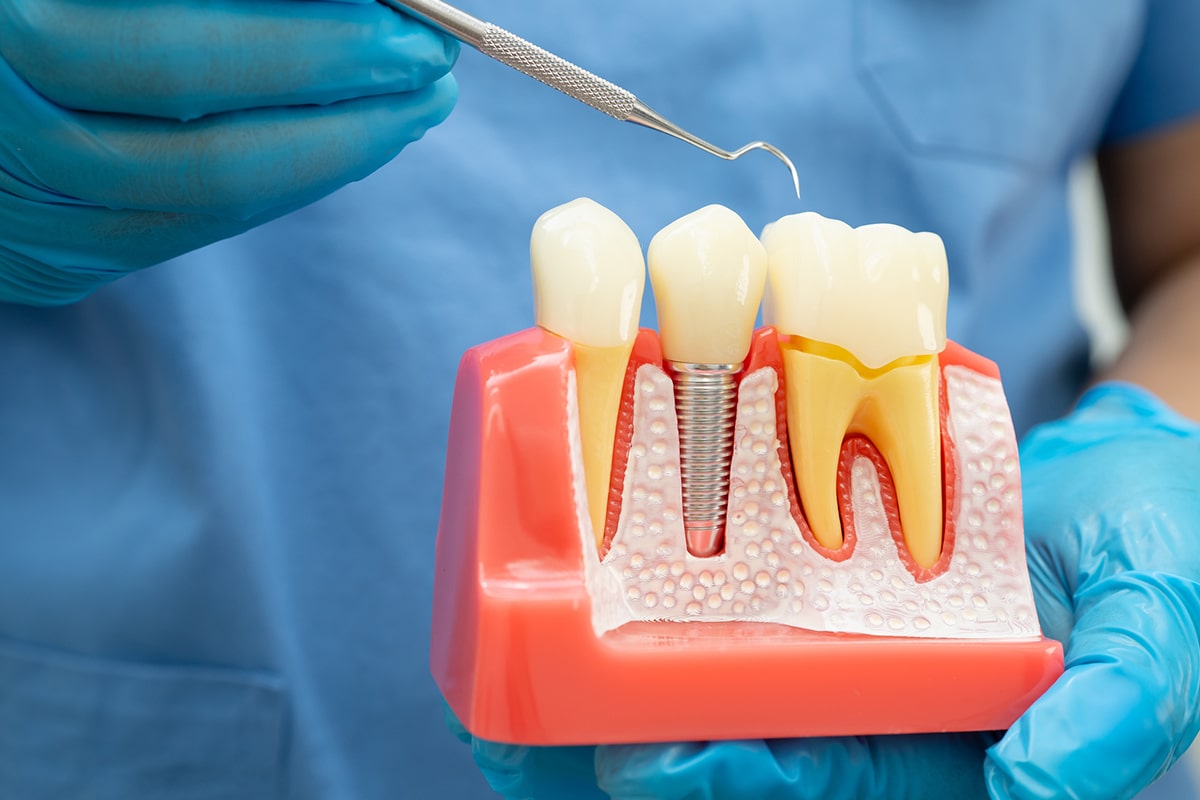
An implant supported crown replaces both the missing tooth root and the visible portion of the tooth. The process begins with placing a small titanium dental implant into the jawbone. Over several months, the implant fuses with the surrounding bone through a process called osseointegration. Once healing is complete, a custom dental crown is securely attached to the implant.
Because the implant functions like a natural tooth root, it provides excellent stability and helps preserve jawbone health. The final restoration is carefully designed to match the color, shape, and size of your surrounding teeth for a natural looking smile.
Implant supported crowns are commonly recommended for patients who are missing a single tooth and have adequate jawbone to support an implant.
What Is a Traditional Dental Bridge?
A traditional dental bridge replaces one or more missing teeth by using the neighboring teeth as anchors. The healthy teeth on either side of the gap are reshaped to accommodate dental crowns. These crowns support an artificial tooth, known as a pontic, which fills the empty space.
Dental bridges have been used successfully for many years and remain an effective solution for many patients. They generally require fewer appointments than dental implants because there is no surgical implant placement or healing period.
For patients who are not candidates for dental implants due to medical concerns, bone loss, or personal preference, a traditional bridge can provide reliable function and improved aesthetics.
Comparing the Treatment Process
One of the biggest differences between implant supported crowns and traditional bridges is the treatment timeline.
Dental implant treatment typically involves several stages. First, the implant is surgically placed into the jawbone. After a healing period that may last several months, an abutment and custom crown are attached. While the process takes longer, the result is a highly durable restoration that closely mimics a natural tooth.
Traditional bridges usually require two or three appointments over several weeks. After the supporting teeth are prepared, impressions are taken and a custom bridge is fabricated. Once the bridge is ready, it is permanently bonded into place.
Patients looking for a faster restoration may appreciate the shorter treatment time of a bridge, while those focused on long term benefits often prefer implants.
Preserving Healthy Teeth
One of the greatest advantages of implant supported crowns is that they do not rely on neighboring teeth for support.
With a traditional bridge, the adjacent healthy teeth must be reshaped to receive crowns. While this is a well established procedure, it permanently removes some healthy tooth structure.
Dental implants avoid this step entirely. Because the implant stands independently, the surrounding teeth remain untouched. Preserving natural tooth structure whenever possible is often considered beneficial for long term oral health.
Jawbone Health Matters
When a tooth is lost, the jawbone beneath it no longer receives the stimulation created by chewing. Over time, this can lead to gradual bone loss.
Dental implants help prevent this process because the implant transfers chewing forces into the jawbone, much like a natural tooth root. This stimulation encourages the bone to remain healthy and strong.
Traditional bridges restore the visible tooth but do not replace the missing root. As a result, the underlying bone may continue to shrink over time. Significant bone loss can eventually affect facial appearance and create additional restorative challenges.
Strength and Durability
Both implant supported crowns and traditional bridges are designed to restore normal chewing function, but their longevity can differ.
Dental implants have an excellent long term success rate when properly maintained. The implant itself can often last for decades, while the crown may eventually require replacement due to normal wear.
Traditional bridges are also durable but generally have a shorter average lifespan. They may need replacement after 10 to 15 years depending on oral hygiene, bite forces, and the condition of the supporting teeth.
Regular dental visits, good home care, and avoiding habits such as chewing ice or using teeth as tools can help maximize the lifespan of either restoration.
Appearance and Comfort
Modern restorative dentistry allows both treatment options to look remarkably natural. Custom crafted crowns and bridges are carefully designed to blend seamlessly with surrounding teeth. Most people will not notice the restoration during everyday conversation or smiling.
Because implant supported crowns emerge naturally from the gums, many patients find they feel more like their original teeth. Since there is no bridge spanning across the gums, cleaning around an implant can also feel more natural once patients learn the proper techniques.
Bridges provide excellent aesthetics as well, although some patients may need special flossing tools to clean underneath the artificial tooth.
Cost Considerations
Dental implants generally require a higher initial investment because they involve surgery, specialized components, and multiple stages of treatment. Traditional bridges usually cost less upfront, making them an attractive option for some patients.
However, long term value should also be considered. Since implants often last significantly longer and help preserve surrounding bone and teeth, they may reduce future restorative needs. A personalized consultation can help determine which treatment offers the best value for your individual situation.
Who Is a Good Candidate for Each Option?
Implant supported crowns are often ideal for patients who:
- Are missing one tooth
- Have healthy gums
- Have sufficient jawbone or qualify for bone grafting
- Want a long lasting solution
- Prefer preserving adjacent healthy teeth
Traditional bridges may be appropriate for patients who:
- Need a faster restoration
- Are not candidates for implant surgery
- Have neighboring teeth that already require crowns
- Prefer a non surgical treatment option
Every patient has unique needs, so a comprehensive examination is the best way to determine the most appropriate treatment.
Making the Right Choice
Choosing between an implant supported crown and a traditional bridge is not simply about replacing a missing tooth. It is about selecting a solution that fits your overall oral health, lifestyle, and long term goals.
An experienced prosthodontist can evaluate your teeth, gums, bite, and jawbone to recommend the treatment that will provide the best function, appearance, and longevity. With today's advanced restorative techniques, both options can restore confidence and improve quality of life.
If you are considering replacing a missing tooth, scheduling a consultation is the first step toward understanding which treatment is right for your smile.
Frequently Asked Questions About Implant Supported Crowns and Dental Bridges
Is getting a dental implant painful?
Most patients report that implant placement is more comfortable than they expected. Local anesthesia is used during the procedure, and any post treatment discomfort is typically manageable with recommended medications and proper aftercare.
How do I care for an implant supported crown or bridge?
Both restorations require daily brushing, flossing, and routine professional cleanings. Dental bridges may require specialized floss threaders or other cleaning tools, while implants should be cleaned just like natural teeth with careful attention around the gumline.
Can a dental implant replace multiple missing teeth?
Yes. Depending on your situation, multiple implants can support several individual crowns or even an implant supported bridge, reducing the need for removable appliances.
Can a traditional bridge be replaced with a dental implant later?
In many cases, yes. If you currently have a traditional bridge and later decide you would prefer a dental implant, your prosthodontist can evaluate your oral health and jawbone to determine whether implant treatment is an option. Additional procedures, such as bone grafting, may be recommended depending on your individual needs.
Which option feels more like a natural tooth?
Many patients feel that an implant supported crown provides the closest experience to a natural tooth because it is anchored directly into the jawbone. This allows for excellent stability during chewing and speaking, while also preserving the natural feel of the surrounding teeth and gums.
We are committed to restoring healthy, functional, and natural looking smiles through personalized prosthodontic care. Our team works closely with every patient to recommend treatment options that support lasting oral health and confidence. Contact us today to learn more and schedule a consultation.