September 1, 2026
When patients are missing most or all of their teeth, dental implants can provide a much more stable solution than traditional dentures alone. However, implant treatment is not one-size-fits-all. Two common full-arch options are implant fixed teeth and removable implant dentures, and each offers a different combination of stability, maintenance, comfort, and cost.
At Stuart Prosthetic Dentistry, we help patients understand how these treatments differ so they can choose an option that fits their oral health, lifestyle, and long-term goals. Both treatments use dental implants to provide support, but the way the replacement teeth attach to those implants is very different.
What Are Implant Fixed Teeth?
Implant fixed teeth, also known as an implant-supported fixed complete prosthesis, replace an entire upper or lower arch of missing or failing teeth. Multiple dental implants are placed in the jawbone, and a full set of replacement teeth is secured to those implants.
The most important distinction is that the restoration is fixed in place. Patients do not remove it at home. If the prosthesis needs to be removed for maintenance, repair, or evaluation, that is typically done by the prosthodontist.
A fixed implant prosthesis can replace both missing teeth and gum tissue while covering significantly less oral tissue than a conventional denture. Because the restoration is securely attached to the implants, it is designed to remain stable while eating, speaking, and going about everyday activities.
Depending on the individual case, four or more implants may be used to support a fixed full-arch prosthesis. Some patients may also qualify for immediate treatment in which a temporary fixed restoration is attached on the same day the implants are placed. After the implants heal and integrate with the jawbone, a definitive restoration can be created.
What Are Removable Implant Dentures?
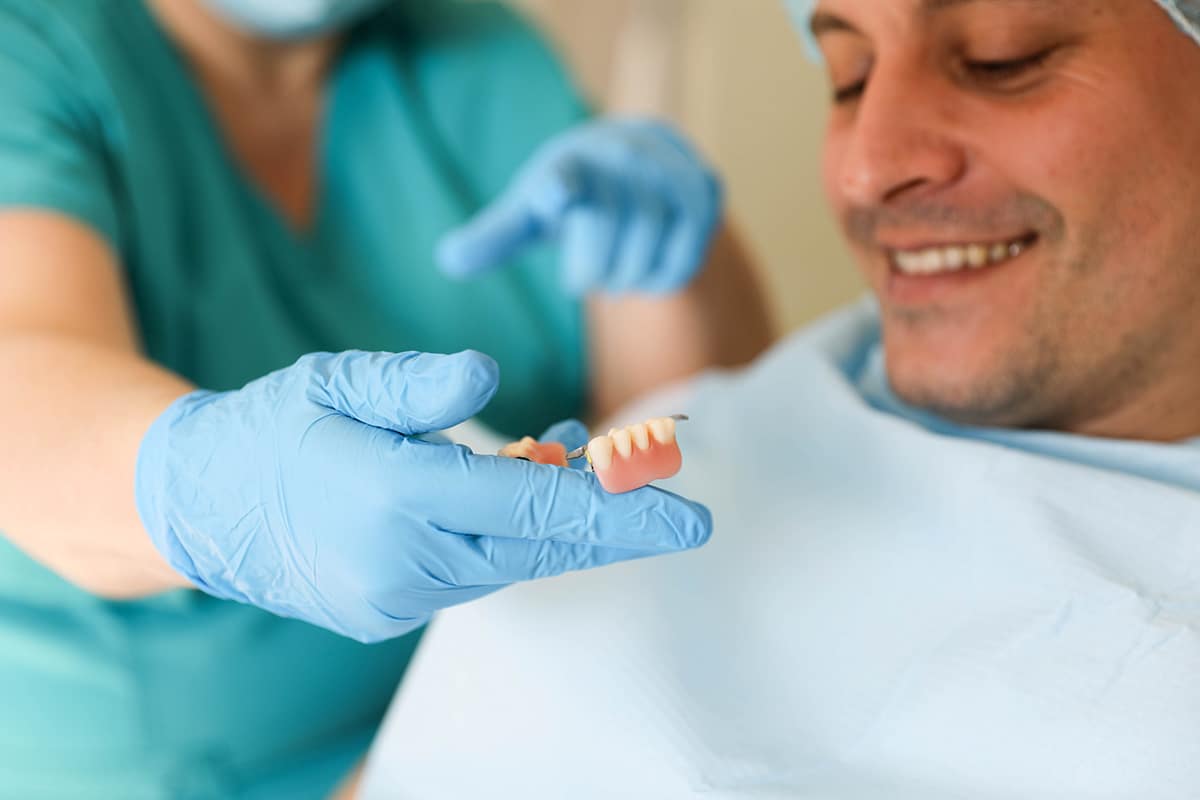
Removable implant dentures also use dental implants, but the denture itself can be taken out by the patient. These restorations may also be called implant-retained dentures, implant-supported dentures, implant overdentures, or snap-in dentures.
Like traditional dentures, removable implant dentures can replace both missing teeth and gum tissue. The difference is that implants and attachment components help hold the denture in place. Instead of relying primarily on suction, adhesives, or the shape of the gums for stability, the denture connects to implants placed in the jaw.
This additional retention can make the denture feel much more secure when speaking and chewing. Implant-retained dentures can also help reduce some of the movement that patients may experience with conventional dentures.
Removable implant dentures commonly use two to four implants, although the number depends on the arch being treated and the individual patient's anatomy and needs. Attachments may include Locator-style abutments, bars, or similar components that allow the denture to snap securely into position.
Implant Fixed Teeth vs Removable Implant Dentures: Key Differences
Although both treatments can significantly improve stability compared with conventional dentures, there are several important differences to consider.
Removal
Fixed implant teeth remain in the mouth and are not removed by the patient. Removable implant dentures are designed to be taken out for cleaning and usually should not remain in the mouth continuously.
For patients who strongly prefer the experience of having teeth that stay in place at all times, a fixed restoration may be more appealing. Patients who are comfortable removing their prosthesis may find an implant-retained denture to be an effective alternative.
Stability
Both options use implants for support, but fixed implant teeth generally provide the greatest sense of permanence. They are screwed into implant components and remain securely attached throughout normal daily activities.
Removable implant dentures are also significantly more stable than conventional dentures because they connect directly to implants. However, they still function as removable prostheses and may require occasional replacement of attachment components as those parts wear over time.
Cleaning and Maintenance
Neither option is maintenance-free. With removable implant dentures, patients can take the denture out to clean it as well as the implants and attachments underneath. Over time, the denture may need adjustments, relining, replacement attachment components, or eventual replacement.
Stuart Prosthetic Dentistry recommends ongoing professional maintenance for implant-retained dentures because bacteria can collect around implants and contribute to peri-implant disease. Regular evaluation also allows us to check the fit, bite, stability, attachment system, and condition of the denture.
Fixed implant teeth require a different cleaning routine. Patients must carefully clean around and beneath the prosthesis because the restoration cannot simply be removed at home. Although dental implants and implant restorations cannot develop cavities, the tissues surrounding the implants must remain healthy to protect the supporting bone.
Amount of Oral Coverage
One reason some patients prefer fixed implant teeth is that the prosthesis generally covers less tissue inside the mouth than a conventional or removable denture. Traditional upper dentures often extend across the palate for support.
Dental implants allow the restoration to rely more heavily on implant support. Depending on the design, implant-retained removable dentures may also reduce the amount of coverage required compared with conventional dentures.
Number of Implants
Fixed full-arch restorations generally require more implants than removable implant dentures. Stuart Prosthetic Dentistry notes that fixed complete prostheses often use four or more implants, while removable implant dentures frequently use approximately two to four implants.
The exact number depends on factors such as the jaw being treated, available bone, the opposing teeth, bite forces, and the final prosthetic design.
Cost
Removable implant dentures are generally a more affordable implant-supported full-arch option because they often require fewer implants and use a removable acrylic denture design.
Fixed implant teeth tend to involve additional implants, more complex restorative treatment, and more advanced prosthetic materials. Several definitive materials may be available, including acrylic resin supported by a titanium framework, zirconia, or restorations using individual ceramic or porcelain crowns. The appropriate choice depends on the patient's functional, esthetic, and financial priorities.
Which Implant Option Is Better?
There is no single solution that is best for every patient. The right choice depends on what you want from your replacement teeth and what your oral health can support.
Implant fixed teeth may be an attractive option if you want replacement teeth that remain in your mouth, offer a highly stable feel, and more closely resemble the experience of natural teeth. They may also appeal to patients who want to minimize the amount of removable material covering the gums or palate.
Removable implant dentures can be an excellent choice for patients who want greater stability than conventional dentures without moving to a completely fixed full-arch restoration. Because they can be removed, they may also make it easier for some patients to clean the prosthesis and the implant components underneath.
Your bone structure, remaining teeth, gum health, bite, medical history, hygiene habits, and treatment budget can all influence which option makes the most sense.
Why Prosthodontic Planning Matters
Full-arch implant treatment involves much more than simply placing implants. The location and number of implants must support the final restoration, which means the treatment should be planned with the finished smile in mind.
Prosthodontists receive advanced specialty education in restoring and replacing teeth. Stuart Prosthetic Dentistry's Dr. Tyler also worked as a Certified Dental Technician before becoming a dentist, giving him additional experience with the laboratory and technical aspects of implant-supported restorations.
This restorative perspective is especially important when choosing between fixed and removable implant options. We consider how the prosthesis will look, how it will function within your bite, how it can be maintained, and how the implants will support it over time.
Choosing the Right Full-Arch Implant Solution
If you are missing all or most of your teeth, both implant fixed teeth and removable implant dentures can provide benefits that traditional dentures alone cannot offer. Dental implants improve the stability of replacement teeth while also stimulating the jawbone and helping preserve the bone surrounding the implants.
The biggest question is often how you want your new teeth to function. Some patients place a high priority on having a restoration that never needs to be removed at home. Others prefer the affordability, easier access for cleaning, and reliable retention offered by removable implant dentures.
At Stuart Prosthetic Dentistry, we can evaluate your oral health, discuss your priorities, and explain which treatment options are appropriate for your individual situation.
Frequently Asked Questions About Full-Arch Dental Implants
Do removable implant dentures move when you eat?
Implant-retained dentures are designed to fit much more securely than conventional dentures because attachments connect the denture to dental implants. This additional support can reduce rocking and movement while chewing and speaking.
Can fixed implant teeth be removed?
Fixed implant teeth are not intended to be removed by the patient. The prosthesis is secured to the implants and generally stays in place unless a prosthodontist needs to remove it for professional maintenance, repair, or evaluation.
How many implants are needed for a full set of teeth?
The number varies by treatment. Fixed complete implant prostheses commonly require four or more implants, while removable implant dentures often use two to four implants. Your available bone, bite, jaw anatomy, and prosthetic design all help determine the appropriate number.
Do implant dentures still need professional cleanings?
Yes. Dental implants require regular hygiene maintenance because bacteria can accumulate around them and potentially contribute to inflammation and bone loss. Stuart Prosthetic Dentistry recommends individualized professional maintenance based on each patient's needs.
Are implant fixed teeth the same as traditional dentures?
No. Traditional dentures are removable and primarily rest on the gums. Implant fixed teeth are secured to dental implants and stay in place, providing a different level of stability and function.
At Stuart Prosthetic Dentistry, we provide comprehensive dental care ranging from complex prosthetic dentistry to routine preventive services. We help patients throughout Stuart and surrounding communities explore restorative options designed around their oral health, function, and long-term goals. To schedule a consultation with our team, contact us today.